
 All articles
One Interface to Rule Them All: Your Mother Tongue Is Now a Programming Language

 November 12, 2026
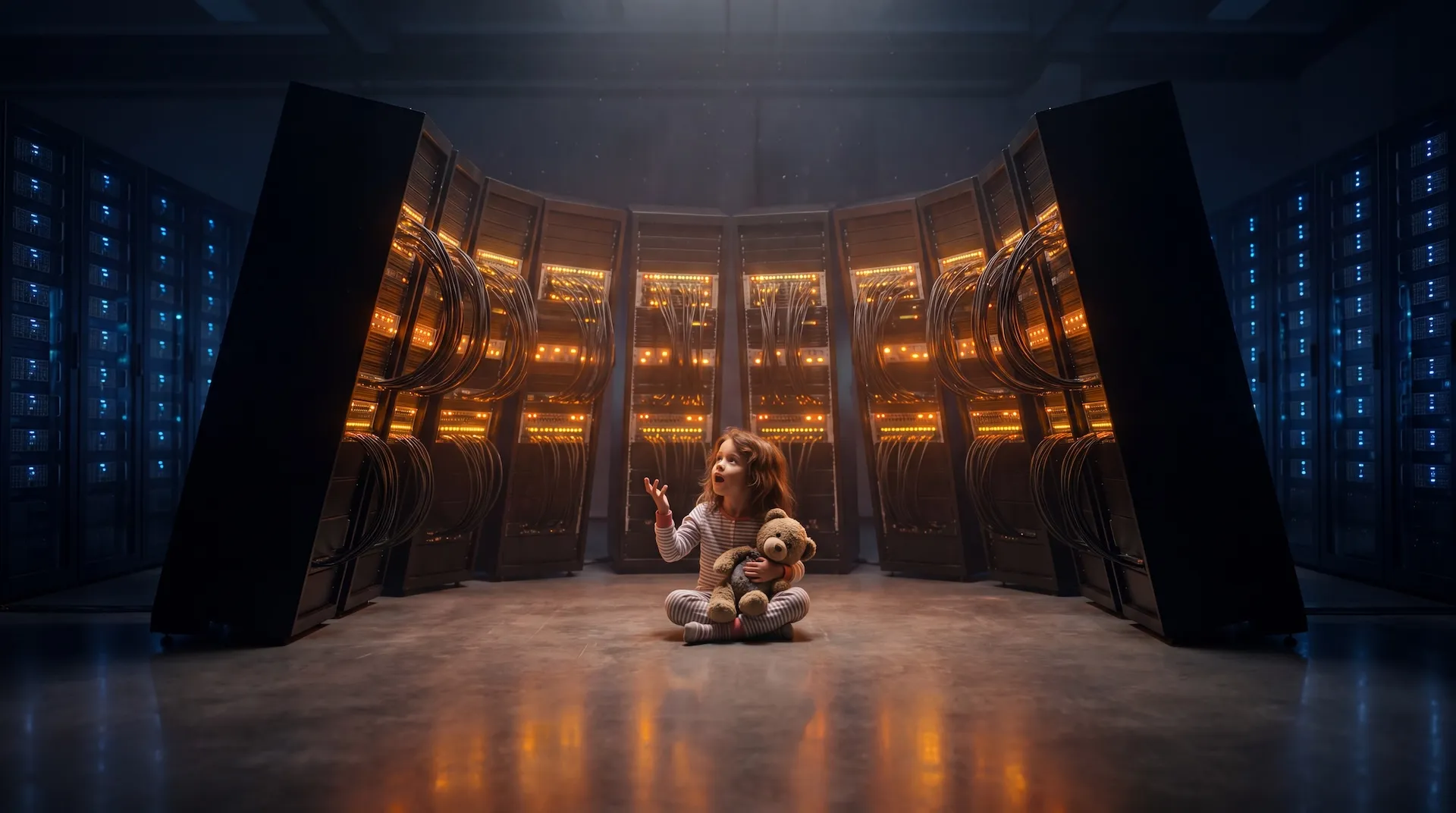
The most advanced technology we have ever built runs on the oldest interface we own.
Language. The AI interface is the thing you picked up at the kitchen table, long before you could tie your shoes.
For seventy years, the human adapted
For seventy years, talking to a machine meant learning its language first. Punch cards in the fifties. Command lines in the seventies. Then came menus, mice, forms, and thousands of screens, each with its own logic. Every step got friendlier, yet the deal stayed the same: the human adapts. You took the course. You learned where the button was. The few who spoke machine built the digital world, and everyone else filed a request with IT and waited.
That deal has flipped. The machine now speaks human.
Your mother tongue is the new code
Andrej Karpathy, one of the founding members of OpenAI, said it in one line back in 2023: “The hottest new programming language is English.” He could have said Dutch, Hindi, or Portuguese. Your mother tongue has become a programming language. A florist in Utrecht can describe the ordering app she wants and watch it appear. A teacher can build a practice tool for one struggling pupil in the time it takes to drink a coffee. Nobody asks them for a computer science degree. They only have to say what they mean.
One AI interface for every system
Now walk into any large company. You’ll find hundreds of applications, each with its own login, its own logic, and its own certified experts. Most of them can’t or won’t talk to each other, so people do the translating: copy from one screen, paste into the next.
That patchwork is getting a single front door. Call it Claude, ChatGPT, Gemini, or whichever name wins in your office. Underneath, they share one design: dialogue. You ask, it answers, you ask again, typed or spoken. A four-year-old knows how this works, because it’s how she has gotten things done ever since she could point at the cookie jar and say “that one.”
The numbers follow the interface. Roughly one in seven people alive now talks to ChatGPT every week, less than four years after it launched. Neither the PC nor the internet spread this fast, and nobody needed a manual.
When the interface turns human, so does the bottleneck
Here’s what I find most beautiful about it. When the interface turns human, the bottleneck turns human too.
Your value at work used to depend partly on how well you could wrestle a monster like SAP into doing what you needed. That skill is fading. What decides the outcome today is how well you can put a question into words, how precisely you can describe what you want, and how curious you are to begin with.
Two people open the same AI on the same morning. One asks it to do his thinking for him and gets back a polished version of what he already believed. The other lays her opinion on the table and asks the machine to take it apart. Same tool. She walks away sharper, he walks away lazier.
Curiosity, clarity, and the courage to have your own view challenged are as old as the campfire. A machine has made them the scarce skills at work.
This is how technology helps us become more human. For decades we bent ourselves toward the machine, thinking in fields, codes, and drop-down menus. Now the machine bends toward us, and we get to show up as we are: speaking, asking, doubting, imagining.
The next interface is older than words
And language is only a stop along the way. In my 7 Wave Model, the wave after AI is the spatial web, where information leaves the screen and takes shape in the room around you. That interface is even older than words. Months before you spoke your first one, you were reaching for a cup, stacking blocks, and learning that a ball rolls off the table. Space was your first language.
The pattern is hard to miss. The closer an interface sits to how we already live, the faster we embrace it. The AI wave needs about ten years to mature. I expect the spatial wave to move faster still, because you won’t even have to find the words. You’ll point, grab, and walk.
So the wall between having an idea and building it is coming down. The website, the app, the business you’ve been carrying around in your head for years: none of it has to wait for a programmer or a budget any longer. The only thing it still waits for is you, saying it out loud.
Over to you.
That dream you keep postponing: what’s your excuse, now that you can build it in your own words?
And I’d like your view on the bigger claim. Do you feel technology is making us more human, or do you see it pulling us the other way? Tell me in the comments. I read every one.
Christian Kromme writes The Human Spark – Beyond AI, a newsletter about what it means to be human in a world being reshaped by technology.
Sources: ChatGPT weekly users as reported by OpenAI (September 2026); adoption speed compared with the PC and the internet, Stanford AI Index 2026.